Commercial Charbroiler Cooking Tips
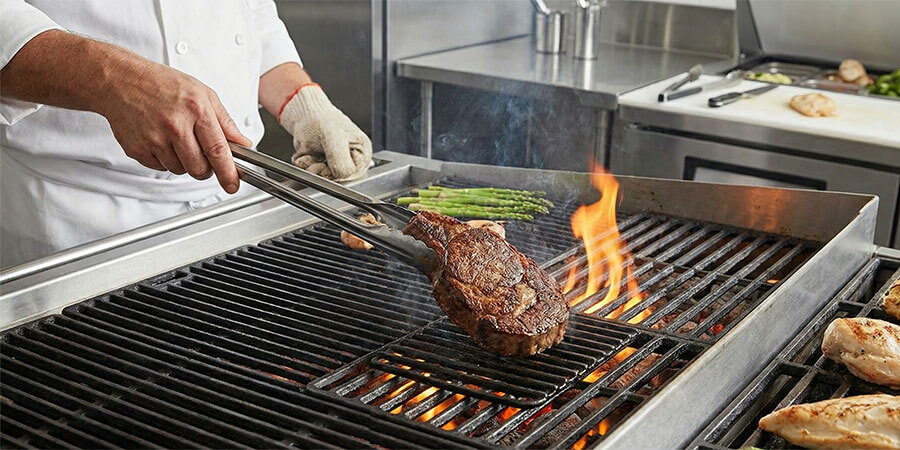
Table of Contents
Use heat zones, a simple prep routine, and disciplined cleanup to keep charbroiler results consistent across every service
Done right, a charbroiler produces incredible flavor, but only when the station is run with repeatable habits. These tips cover setup, zoning, flare-up control, product technique, and daily maintenance.
Charbroilers are simple machines that punish inconsistency. If preheat is rushed, zones are undefined, or grates are neglected, you get the same predictable problems: weak marks, overcooked exteriors, flare-ups, and a station that is hard to clean.
This post is not a buying guide. If you are comparing sizes, fuel types, and configurations, use the Commercial Charbroiler Buying Guide. This is about running the equipment you already have.
What a Charbroiler Is (and Why It Behaves Differently Than a Griddle)
A charbroiler cooks with direct radiant heat coming up through grates. That grate contact is what creates grill marks. The open design is also why grease management matters more than on a flat-top.
Two practical implications:
- You need contact and timing to get marks that look consistent.
- You need a grease routine so flare-ups do not control the station.
Start With a Repeatable Preheat Routine
The fastest way to ruin charbroiler output is short preheat.
A practical opening rhythm:
- Preheat long enough for grates and radiants to stabilize (not just the air temperature)
- Brush grates before the first product hits
- Lightly oil grates to reduce sticking and tearing
If your team changes the routine shift to shift, your results will change shift to shift.
Set the Station Up to Reduce Mistakes
Charbroiler work gets sloppy when the station is missing basics.
Set up a simple charbroiler kit:
- Grill brush or scraper (appropriate for your grate type)
- Two towels (one for handles, one for wiping)
- Tongs dedicated to raw-to-cook transitions
- A small container of neutral oil for grate wipe-down
- A clearly defined "flare-up zone" (cool area or a finishing area)
This is not about adding tools. It is about reducing the number of times a cook improvises mid-rush.
Build Heat Zones (So You Stop Chasing Food)
Most charbroilers can run multiple zones. Use them on purpose.
- Hot zone: fast sear and strong marks
- Medium zone: steady grilling and finishing
- Cool zone: holding, staging, and flare-up recovery
When you do not have zones, you end up moving food randomly and guessing doneness.
Radiant vs Infrared: Only What You Need to Know for Cooking
Your charbroiler may heat differently depending on design.
- Radiant units are common and versatile.
- Infrared-style units can deliver intense heat quickly, which can be great for fast searing.
From an operator standpoint, the takeaway is simple: define zones and build a station routine that matches your menu. If you are deciding which design fits your volume and product mix, the Commercial Charbroiler Buying Guide covers configuration tradeoffs.
Use the Right Technique for the Food (Not One Technique for Everything)
Charbroiler success is about contact and timing.
For proteins that need strong marks:
- Place product and leave it long enough to release naturally
- Rotate once for crosshatch, then finish in a medium zone
For fattier items:
- Keep a clear cool zone ready for flare-up recovery
- Avoid constant flipping, which can drip more fat and increase flare-ups
For vegetables:
- Use consistent thickness so the station can run on rhythm
- Finish in a medium zone to avoid burning the exterior before the interior softens
Prep and Product Setup: Make Grilling Predictable
Charbroilers reward consistency, so your prep should support it.
Standardize thickness. If one cook is grilling thick cuts and another is grilling thin cuts, timing becomes guesswork.
Dry the surface before it hits the grate. Excess surface moisture delays browning and can reduce mark quality.
Stage by cook time. Group items by how long they take to grill so you can run the station in waves instead of chaos.
Use a clean handoff for raw to cooked. Keep tools and landing areas separated so you do not create cross-contact problems under pressure.
Flare-Ups: Control the Station, Not the Fire
Flare-ups are usually a workflow issue.
Common causes:
- Too much fat hitting the same hot area repeatedly
- Grates and crumb trays not cleared during service
- Product crowding that forces constant movement
A simple flare-up response that works:
- Move the item to the cool zone
- Let the flare-up settle
- Rebuild marks in a medium zone instead of returning straight to the hottest spot
The goal is to keep service moving without turning flare-ups into a constant distraction.
Cooking for Volume: Keep the Station on Rhythm
When charbroiler output collapses, it is usually because cooks are reacting to the last mistake.
Run in small, repeatable waves:
- Load the hot zone with items that need marks
- Move to medium to finish
- Use the cool zone to hold briefly or recover from flare-ups
This keeps the hot zone available for what it does best: fast, confident searing.
Food Safety and Station Discipline
Charbroilers can be high-risk for cross-contact because the station moves fast.
Practical controls:
- Use a clear raw-to-cooked workflow (separate landing areas)
- Keep one set of tools for raw handling and one set for finishing and plating
- Do not reuse a dirty towel for "quick wipes" on food-contact areas
This is not about adding steps. It is about preventing one mistake from becoming a repeat mistake.
Reduce Smoke and Grease Buildup During Service
Charbroilers will smoke. The difference is whether the station becomes unpleasant or stays manageable.
Habits that reduce smoke spikes:
- Keep drip and debris areas from overflowing
- Do quick mid-shift scrapes instead of waiting until close
- Avoid crowding that forces constant movement and dripping
When a charbroiler runs dirty, the smoke and flare-ups get worse, and the station slows down.
Use Partial Shutdowns When Volume Drops
If your charbroiler has multiple controls, you can run fewer zones during slower periods.
The point is not to chase minor savings. The point is to reduce wear and keep the station easier to manage.
Practical approach:
- Keep one hot zone ready
- Keep one medium zone for finishing
- Use the rest only when volume demands it
Closing Routine: Set the Next Shift Up to Win
Most charbroiler frustration is inherited from the previous shift.
A close routine that holds up:
- Brush grates while hot
- Remove debris and grease traps before they harden
- Apply a light oil coat to protect grates
- Leave the station stocked with the basics (brush, towels, oil) for open
If performance still feels inconsistent after a clean close, document what the next shift sees (hot spots, weak spots, flare-up frequency). Patterns help you fix the station instead of guessing.
That log also helps training: new cooks can follow the same station rules and hit the same output.
It also makes opening faster because the station starts from a known baseline.
Seasoning and Daily Grate Care
Seasoning is not a one-time event. It is a habit.
Do this daily:
- Brush grates when hot to remove residue
- Apply a light coat of oil at close to reduce rust and sticking
If your close routine is inconsistent, the next shift starts behind.
The Most Common Charbroiler Problems (and What to Fix)
Use this table to diagnose the station quickly.
| Problem: | Likely Cause: | Fast Fix: |
| Weak grill marks | Not enough preheat or poor contact | Extend preheat; stop moving product too soon |
| Food sticks and tears | Dirty grates or no oil film | Brush hot; light oil wipe; tighten close routine |
| Constant flare-ups | Grease buildup or overcrowding | Clear debris; use zones; move to cool zone to recover |
| Uneven cooking | No zoning or blocked heat areas | Re-define zones; avoid overloading one area |
| Bitter, burnt taste | Station too dirty or old residue | Mid-shift scrape; deeper weekly cleaning |
A Checklist Table Your Team Can Follow
Use this as a station SOP.
| Task: | When: | Why It Matters: | What "Done" Looks Like: |
| Full preheat + stabilize | Open | Sets consistent marks and cook times | Grates are fully hot, not just warm air |
| Brush grates | Open and as needed | Prevents sticking and burning | No heavy residue on contact points |
| Define heat zones | Open | Speeds decisions and reduces mistakes | Hot/medium/cool areas are understood |
| Keep a cool zone clear | Always | Flare-up control and finishing | Space available to move food immediately |
| Scrape trays and clear debris | Mid-shift | Reduces smoke and flare-ups | Drip areas are not overflowing |
| Brush + light oil | Close | Prevents rust and improves release | Thin, even coat on clean grates |
Maintenance Habits That Reduce Downtime
Most charbroiler problems do not show up all at once. They show up as gradual performance drift.
Weekly habits that pay off:
- Inspect grates for warping or heavy buildup
- Check controls for smooth operation
- Clean areas that trap grease and carbon
If you need parts or replacements for wear items, start with Charbroiler Accessories and Parts.
If grease management is a recurring pain point, the product selection guidance in Best Commercial Kitchen Degreaser can help you standardize cleanup without guessing.
If you run into performance drift and cannot solve it with cleaning and zoning, it may be time to evaluate whether your current unit still fits your volume. The Commercial Charbroilers category is a good reference point for footprints and configurations.
Frequently Asked Questions
What is a charbroiler used for in a restaurant?
A charbroiler is used for high-heat grilling that creates browning, grill marks, and a smoky, grilled flavor profile. It is commonly used for proteins and vegetables during high-volume service.
How do you get better grill marks on a charbroiler?
Preheat long enough for the grates to stabilize, oil lightly, and leave product in place until it releases naturally. Strong marks come from consistent contact and timing, not constant movement.
How do you control flare-ups on a commercial charbroiler?
Use a dedicated cool zone so you can move food immediately, clear debris during service, and avoid crowding. Flare-ups often decrease when the station has a predictable zoning and cleanup rhythm.
Should you use heat zones on a charbroiler?
Yes. Heat zones speed decisions, reduce mistakes, and give you a place to recover from flare-ups without interrupting service.
How often should a charbroiler be cleaned?
Grates should be brushed daily and kept clear during service. A deeper cleaning on a weekly schedule helps prevent grease buildup that contributes to smoke, uneven heat, and flare-ups.
What is the difference between infrared and radiant charbroilers?
Radiant charbroilers use burners and radiants to heat the grates. Infrared designs focus heat differently and can provide strong searing performance. The best choice depends on menu and station workflow, which is covered in the buying guide.
Related Resources
- Commercial Charbroiler Buying Guide - If you are comparing configurations and sizes
- Commercial Charbroilers - Browse common formats and footprints
- Charbroiler Accessories and Parts - Replacement parts and add-ons
- Cleaning vs Sanitizing vs Disinfecting - Keep cleaning routines consistent across the kitchen
- Best Commercial Kitchen Degreaser - Standardize degreasing routines for grill stations
Share This!