Commercial Bar Equipment Essentials
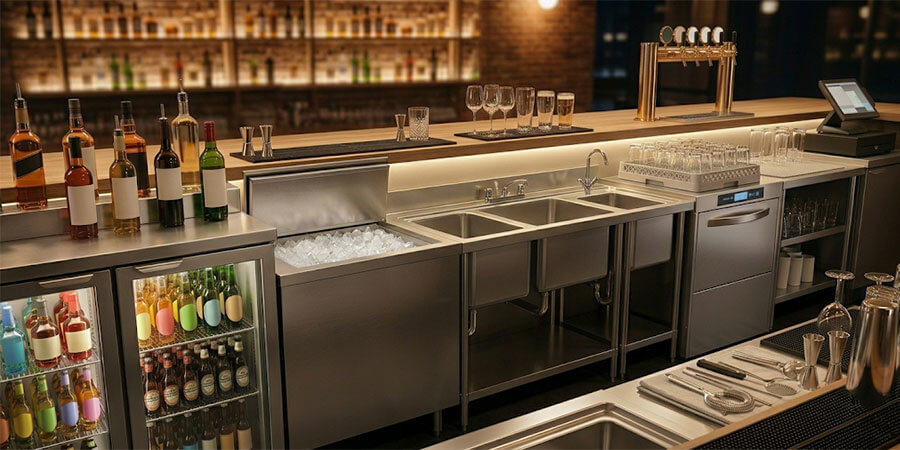
Table of Contents
Build a stronger bar setup by focusing on refrigeration, ice, sinks, glass care, and service speed instead of treating the bar like a random checklist
Bars usually feel simple from the guest side of the counter. From the operator side, they are one of the most system-dependent stations in the building. If refrigeration is poorly placed, the ice machine is undersized, glasswashing is slow, or the back-bar layout creates extra movement, service quality drops quickly.
That is why the best commercial bar setup is not just a pile of must-have equipment. It is a coordinated service station built around speed, storage, sanitation, beverage style, and the kind of bar you are actually running.
Start With The Kind Of Bar You Are Actually Operating
Not every bar needs the same equipment mix.
| Bar Type: | What The Equipment Has To Solve: |
| Full-service cocktail bar | Speed, organization, glassware flow, garnish control |
| Restaurant bar | Shared production, faster ticket pacing, mixed beverage demand |
| Sports bar or beer-forward bar | Draft service, refrigeration, ice, and volume handling |
| Service bar | Back-of-house speed and order flow more than guest-facing display |
This matters because the right setup depends on what the bar is really doing. A cocktail program, a sports bar, and a restaurant service bar can all serve alcohol, but they do not rely on the same station priorities.
Refrigeration Usually Defines The Whole Back Bar
The strongest commercial bar setups usually start with refrigeration because so many other decisions depend on it.
That includes:
- Bottle and can storage
- Garnish and mixer staging
- Wine or specialty beverage holding
- Keg or draft support where needed
- How far bartenders have to move to reach the next item
If the refrigeration plan is weak, the rest of the station starts compensating for it all shift long.
| Refrigeration Question: | Why It Matters: |
| Is the cold product where the bartender actually needs it? | Reduces wasted motion |
| Is there enough capacity for peak demand? | Prevents restock scramble during service |
| Is the bar overdependent on “back room” trips? | Slows service and weakens consistency |
| Are specialty beverages stored in a way that makes sense? | Supports quality and speed together |
For the product-side category, Bar Refrigeration is the strongest direct follow-up.
Ice Is A Bar System, Not A Single Machine Purchase
No bar really runs without reliable ice, but the ice question is bigger than the machine alone. You also need to think about storage, reach, refill rhythm, and whether the machine output fits the pace of the program.
That matters because a bar can have a technically decent ice machine and still struggle if the bin location is awkward or if demand spikes faster than the refill flow can handle.
This is one reason bars often feel either smooth or chaotic very quickly. Ice pressure exposes weak station planning faster than almost anything else.
If ice demand is central to your operation, Ice Machines are the most useful internal resource.
It also helps to think of ice as part of station design rather than as a separate utility. If the bartender has to keep leaving the working zone to solve the ice problem, the machine output on its own is not really solving the service problem.
Sinks And Glasswashing Are Part Of Service Speed, Not Just Sanitation
Operators sometimes think of underbar sinks and glasswashers as secondary support items. In reality, they often play a major role in whether the bar can keep up once service gets busy.
Underbar sinks help the station reset quickly, support safer cleanup, and reduce unnecessary walking. Glasswashing matters because bar service can slow down fast once clean glassware starts becoming scarce.
| Station Need: | Why It Matters In A Real Bar: |
| Underbar sink access | Faster rinse, cleanup, and handwashing support |
| Glasswasher capacity | Keeps service from slowing during busy runs |
| Better glassware flow | Prevents shortages and clutter |
| Cleaner reset habits | Helps the station stay usable instead of degrading through the shift |
This is why the sanitation side of the bar should be treated as part of speed, not only as a closing task.
That is one reason bars can feel dramatically different even when they serve similar menus. A station with better sink access and better glasswashing support usually feels calmer because the bartender is not constantly working around dirty glassware or waiting for reset capacity to catch up.
For the direct categories, Underbar Sinks are the strongest next stop.
Glassware And Service Tools Need To Match The Program
Many bars fail to stock the right glassware and small service tools consistently enough for the drinks they actually sell most often.
That includes the obvious items - rocks glasses, pints, wine glasses, cocktail glasses, and beer glassware - but it also includes the practical supports that shape speed:
- Jiggers
- Pour tools
- Strainers
- Garnish containers
- Organized storage for glassware and bar tools
The point is not to own every possible vessel. It is to own the mix that matches the real menu without forcing constant substitutions or awkward resets.
The product side should still be chosen to match the real drink mix instead of a generic “full bar” checklist.
Draft And Beer Programs Need Their Own Logic
If the bar is beer-forward, draft service changes the equipment plan significantly.
That usually means thinking more carefully about:
- Keg storage
- Tap count and setup
- Underbar or nearby cold support
- Line care and service pace
This is another reminder that “commercial bar equipment” is not one universal list. The right mix depends heavily on whether the bar sells cocktails, beer, wine, frozen drinks, or some combination of all four.
If draft service is a major part of the concept, Beer Dispensers deserve direct comparison rather than being treated like a minor accessory purchase.
This is also where the bar can gain or lose a lot of time. If draft is central to the program, the storage, line care, and pour workflow should be treated like core service infrastructure rather than like a side feature.
Blending, Frozen Drinks, And Specialty Beverage Service Need Their Own Space
Bars that serve frozen cocktails or blender-heavy drinks need to plan for more than the blender itself.
They also need:
- A station layout that can handle the mess and noise
- Enough ice and ingredient support nearby
- A cleaning routine that keeps the setup usable through the shift
This is one reason frozen-drink service can feel far more disruptive than operators expect if it is forced into an already crowded station.
If that is part of your beverage program, frozen-drink support should be given real station space rather than squeezed into whatever corner is left over.
The same is true for frozen-drink or specialty stations more broadly: if the bar sells them often, they deserve real working space. If they are only occasional, the setup should be scaled to that reality rather than allowed to crowd out the rest of the bar.
POS, Inventory, And Ticket Flow Still Matter Behind The Bar
A bar does not only serve drinks. It also processes tabs, tracks inventory, and handles ticket communication in real time.
That means the strongest bar setups usually think about:
- POS placement
- Ticket visibility
- Where checks land and close
- How bartenders communicate with the kitchen or servers
This is what keeps the station from becoming a traffic jam when drink making, payment, and service communication all happen at once.
For the systems side, the real question is whether tabs, tickets, and inventory movement stay visible and manageable when the bar is busy.
Underbar Organization Usually Separates Fast Bars From Frustrating Ones
Many bars do not really struggle because they lack a single expensive piece of equipment. They struggle because the station is organized poorly between the cold storage, sink area, glassware path, and service tools.
That means underbar organization deserves just as much attention as the larger equipment list. If bartenders are constantly crossing paths for garnish bins, reaching around clutter to wash glassware, or stepping away from the guest-facing zone to solve a basic storage problem, the setup is already working against service.
This is also why a strong bar station often looks calmer than outsiders expect. The equipment is there, but it is placed to support movement instead of interrupting it. That placement is part of the equipment decision, not a separate decorating step.
The Best Bar Setup Usually Feels More Organized Than Fancy
The strongest bars usually have a few things in common:
- Cold product is close to where it is needed
- Ice support is dependable
- Sinks and glass flow are not an afterthought
- Tools and glassware match the actual program
- The station is built for movement, not just display
That is what makes the bar feel efficient. Guests notice speed and confidence more than they notice whether the bartender is constantly taking extra steps to compensate for a weak setup.
That is also why many good bar-equipment decisions look boring in the best possible way. They reduce needless movement, protect reset speed, and keep the station from becoming more chaotic as the shift gets busier.
Frequently Asked Questions
What equipment does a commercial bar need most?
The core equipment usually starts with refrigeration, ice production and storage, underbar sinks, glasswashing support, glassware and bar tools, and any beer, blender, or specialty beverage systems the concept depends on. The exact mix should follow the real bar program, not a generic list.
What is the most important part of a bar setup?
Refrigeration and ice are usually among the biggest drivers of how the station feels because they affect speed, reach, and drink consistency all shift long. If those two systems are weak, the rest of the bar feels harder to run.
Does every bar need a glass washer?
Not every bar uses the same setup, but busy commercial bars usually benefit from dedicated glasswashing support. Once clean glassware becomes scarce during peak service, the whole station slows down quickly.
Why do underbar sinks matter so much?
Because they support faster cleanup, easier resets, and better handwashing and rinsing flow within the station. They help the bar stay usable during service instead of becoming more chaotic as the shift goes on.
What equipment matters most in a beer-forward bar?
Beer-forward bars usually need stronger draft and cold-storage planning, including keg storage, tap configuration, nearby refrigeration, and service flow that keeps pours moving smoothly during busy periods.
What is the biggest bar-equipment mistake operators make?
Treating the setup like a shopping checklist instead of a working station. A bar can have good individual pieces and still perform poorly if refrigeration, ice, sink access, glassware flow, and service movement were never planned together.
Related Resources
- Bar Refrigeration - Core cold-storage category for behind-the-bar planning.
- Ice Machines - Ice production and storage support for busy beverage service.
- Glass Washer Machines - Glass care and reset support for busy bars.
- Beer Dispensers - Draft-service category for beer-focused bars.
Share This!