How to Advertise Your Restaurant on Any Budget
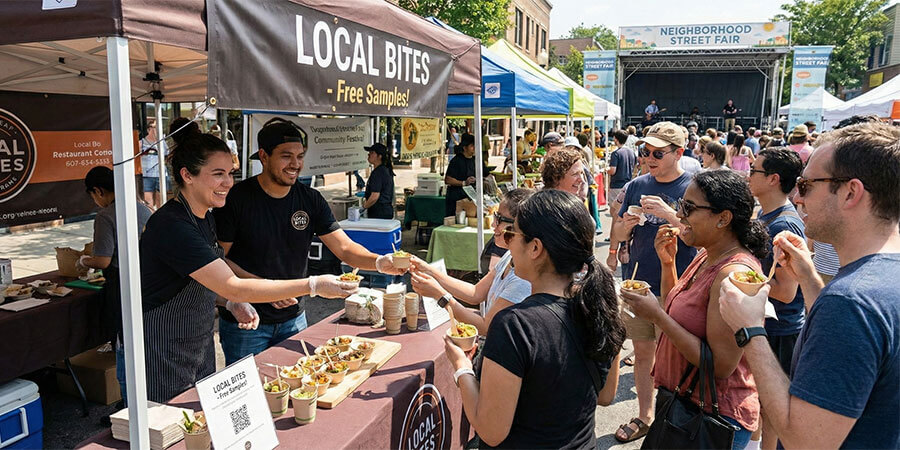
Table of Contents
Proven advertising tactics that independent restaurants can start using this week without a big marketing budget
Word of mouth is still the number one way customers discover restaurants (Toast, 2026) - but you can not leave it to chance. This post covers practical, affordable advertising tactics that work together to get your restaurant noticed: leveraging your existing customers, showing up in local search, building a social media presence, earning reviews, partnering with local businesses, getting into community events, and using email to bring people back.
Most independent restaurant owners know they need to advertise, but the options feel overwhelming - and the budget is tight. The reality is encouraging: restaurants that get the fundamentals right with affordable tactics consistently outperform those that throw money at unfocused advertising.
Industry benchmarks suggest restaurants typically spend 3 to 6 percent of revenue on marketing, though the U.S. Small Business Administration recommends closer to 7 to 8 percent for businesses under five million in annual sales (SBA, 2024). For a restaurant doing half a million a year, that translates to roughly fifteen to forty thousand - not a fortune, but enough to make a real impact when spent wisely. The key is knowing which tactics give you the most return for the least spend.
Here are the most effective ways to advertise your restaurant, starting with the ones that cost the least.
| Tactic: | Cost: | Effort to Start: | Time to See Results: |
| Word of mouth and referrals | Free | Low | 1 - 3 months |
| Google Business Profile and local listings | Free | Medium | 2 - 4 weeks |
| Social media (organic) | Free | Medium - High (ongoing) | 1 - 3 months |
| Review management | Free | Low - Medium (ongoing) | 1 - 2 months |
| Local business partnerships | Free | Medium | 1 - 2 months |
| Community events and sampling | Low - Medium | Medium - High | Immediate - 1 month |
| Email marketing | Low | Medium (setup), Low (ongoing) | 2 - 4 weeks |
Turn Word of Mouth Into a System
Word of mouth remains the most powerful advertising channel for restaurants. Toast's 2026 Restaurant Trends Report confirms it is still the number one way customers discover where to eat - ahead of social media, search engines, and paid advertising combined.
The problem is that most restaurants treat word of mouth as something that just happens. The restaurants that grow fastest treat it as something they actively build.
Ask for referrals directly. Train your team to say something simple after a great interaction: "If you enjoyed tonight, we'd love it if you told a friend." This costs nothing but consistency. Pair it with a referral incentive - a complimentary appetizer for both the regular and their guest - and you turn satisfied customers into active advertisers.
Make sharing easy. Put your social media handles on receipts, table tents, and to-go packaging. When someone takes a photo of their food, they need to know where to tag you. Every tagged post is free advertising to their entire network.
Follow up after great experiences. If you collect email addresses, a simple thank-you message after a first visit with a small incentive to return drives repeat business. Email marketing averages a return of thirty-six dollars for every dollar spent (Litmus, 2025) - one of the highest ROI channels available.
For a deeper system on keeping customers coming back, see our guide on restaurant loyalty programs.
Claim and Optimize Your Local Listings
When someone searches "restaurants near me," your local business listings determine whether they find you or your competitor. "Near me" searches have grown steadily year over year, and the businesses that show up with complete, accurate profiles capture the vast majority of those clicks.
The single highest-impact free advertising move for any restaurant is fully optimizing your Google Business Profile. According to Google, businesses with complete profiles are 70 percent more likely to attract visits and 50 percent more likely to be considered for a purchase. This means filling out every field - hours, menu, photos, business description, service options, and attributes.
Do not stop at Google. Claim your profiles on Yelp, Apple Business Connect, Facebook, and any reservation or delivery platforms you use. Keep your name, address, and phone number identical across every platform. Inconsistencies confuse search algorithms and cost you visibility.
Post weekly updates. Google lets you publish updates about specials, events, and what is happening at your restaurant. Profiles that show regular activity rank higher than dormant ones. Even a simple post about today's special signals to Google and customers that your business is active.
Our local listings guide walks through optimizing Google, Yelp, Apple Maps, and other platforms step by step.
Build a Social Media Presence That Drives Discovery
Social media has become one of the primary ways diners decide where to eat. A 2025 Belle Communication survey reported by Nation's Restaurant News found that 73 percent of Millennial and Gen Z respondents visited a restaurant in the past three months specifically because of a social media review.
You do not need to be on every platform. Pick one or two where your customers actually spend time and be consistent.
Instagram and TikTok work best for restaurants because food is inherently visual. Short-form video - a 30-second clip of a dish being plated, a behind-the-scenes kitchen moment, a time-lapse of your dining room filling up - reaches local viewers through platform algorithms even if your account is new.
Facebook remains effective for reaching a broader age range and works particularly well for promoting events, community involvement, and daily specials.
The key is consistency, not polish. A restaurant that posts three times a week with phone-shot photos will outperform one that posts once a month with professional photography. Show your food, your team, and your personality. Respond to every comment and message - BrightLocal's 2026 Local Consumer Review Survey found that 80 percent of consumers are more likely to use a business that responds to all of its reviews, and the same principle applies to social media interactions.
For platform-by-platform strategies, see our restaurant social media guide.
Earn Reviews and Manage Your Reputation
Online reviews are the modern version of word of mouth, and they directly influence whether someone chooses your restaurant. BrightLocal's 2026 Local Consumer Review Survey found that 68 percent of consumers will only use a business rated four stars or higher - and 74 percent only care about reviews written in the last three months.
The simplest review strategy: Train staff to mention it naturally to happy customers. "We're glad you enjoyed dinner - if you have a moment, a Google review really helps us out." Most customers are willing but just need the nudge.
Respond to every review. Thank positive reviewers by name and reference something specific from their visit. For negative reviews, acknowledge the issue, apologize where appropriate, and offer to make it right privately. Potential customers read your responses to judge how you handle problems.
Star ratings have a measurable impact on revenue. Research from Black Box Intelligence (2023) found that restaurants with stronger hospitality sentiment in reviews outperform competitors by 2.4 percent in sales growth and 1.8 percent in traffic growth. That may sound small, but compounded over a year it represents real money.
Never offer incentives for reviews - it violates platform policies and undermines the credibility that makes reviews valuable in the first place.
Partner With Local Businesses
Cross-promotion with complementary local businesses is one of the most underused advertising tactics. It costs nothing beyond relationship building and expands your reach to an entirely new customer base.
Neighboring businesses are natural partners. A restaurant near a movie theater can offer pre-show dinner specials. A lunch spot near offices can partner with companies for employee appreciation events. Hotels without their own restaurant need reliable dining recommendations for guests - build a relationship with the front desk staff.
Local suppliers are often willing to promote restaurants that feature their products. If you source ingredients from local farms or producers, mention them by name on your menu and social media. They will often cross-promote you to their own audience.
Practical partnership ideas:
- Leave menus or business cards at partner locations
- Offer exclusive discounts for each other's customers
- Cross-promote on social media and email newsletters
- Create joint promotions for holidays or special events
- Feature partner businesses in your restaurant where appropriate
For more on offline partnership strategies, see our offline marketing guide.
Show Up in Your Community
Participating in local events puts your restaurant in front of large, engaged audiences who are already in a spending mindset. Unlike digital ads that compete with infinite scrolling, showing up physically in your community creates impressions that people remember.
Food festivals and taste events let you serve sample portions of your best dishes to hundreds of potential customers in a single day. The exposure extends beyond the event itself - attendees who enjoy your food recommend you to friends and family.
Farmers markets work well for restaurants that emphasize fresh, local ingredients. Your presence at the market reinforces your quality standards and puts you in front of food-conscious consumers who are likely to become regulars.
Sponsorships put your restaurant name in front of community members repeatedly over weeks or months. Youth sports teams, charity fundraisers, school events, and local nonprofit partnerships build goodwill that advertising alone cannot match. People trust personal recommendations far more than any ad - and community involvement generates exactly that kind of organic conversation.
Sampling removes the biggest barrier to trying a new restaurant: risk. Bringing bite-sized portions to a local business, an office park, or a community event lets people experience your food firsthand with zero commitment.
For a complete playbook on community marketing, offline events, and local partnerships, see our offline marketing guide.
Use Email to Bring Customers Back
It is always cheaper to keep an existing customer than to find a new one. Email is the most cost-effective tool for turning first-time visitors into regulars.
Start by building your list. Offer a small incentive at the point of sale - a free appetizer on their next visit in exchange for an email address. Add a signup prompt to your website and online ordering system. Every email you collect is a customer you can reach directly without paying for ads.
Send emails that people actually want. Share new menu items, seasonal specials, and event announcements. Offer birthday and anniversary rewards. Give subscribers early access to limited-time offerings. The goal is value, not volume - one to two emails per week is the right frequency for most restaurants.
Automated flows drive the most revenue per send. Industry data from Klaviyo (2026) shows that automated email flows generate 41 percent of total email revenue from just 5.3 percent of sends. A simple welcome sequence, a birthday email, and a win-back message for lapsed customers can run on autopilot once set up.
For building a complete marketing system that ties all these tactics together, our restaurant marketing guide covers everything from audience research to budget planning and measurement.
Frequently Asked Questions
How much should a restaurant spend on advertising?
Industry benchmarks suggest 3 to 6 percent of revenue, though the U.S. Small Business Administration recommends 7 to 8 percent for smaller businesses. New restaurants often need to invest on the higher end in the first year to build awareness. Start with free and low-cost tactics - Google Business Profile, social media, email, and community partnerships - then expand into paid channels as you learn what works for your market.
What is the most effective way to advertise a restaurant?
Word of mouth remains the number one driver of restaurant discovery (Toast, 2026). The most effective advertising strategy combines word of mouth amplification (referral programs, shareable experiences) with a strong Google Business Profile, consistent social media presence, and active review management. No single channel works alone - they reinforce each other.
How can I advertise my restaurant for free?
Several high-impact tactics are completely free: optimize your Google Business Profile, claim listings on Yelp and Apple Business Connect, post regularly on social media, encourage and respond to customer reviews, partner with local businesses for cross-promotion, and ask happy customers for referrals. These free tactics form the foundation that paid advertising builds on.
Is social media advertising worth it for restaurants?
Organic social media - posting content without paying to boost it - is absolutely worth it and free. Paid social media advertising can also work, but start with organic first to understand what content resonates with your audience. If you do invest in paid ads, target them geographically to reach people within a few miles of your restaurant rather than casting a wide net.
How do I attract new customers to my restaurant?
Focus on visibility and trial. Optimize your local listings so people searching nearby can find you. Post appealing content on social media. Participate in community events and food festivals where potential customers can taste your food. Partner with nearby businesses that serve your target audience. Offer a first-visit incentive to reduce the risk of trying something new.
Should I advertise on Google or social media?
They serve different purposes. Google captures people who are actively searching for a place to eat right now - high intent but lower volume. Social media builds awareness and drives discovery among people who are not actively searching but might be inspired to visit. For most restaurants, optimizing your free Google Business Profile comes first, followed by organic social media, with paid advertising on either platform as a later step.
How do I measure whether my restaurant advertising is working?
Track new customer counts, ask "how did you hear about us" consistently, monitor Google Business Profile insights for search views and direction requests, watch review volume and rating trends, and compare revenue during and after campaigns to baseline periods. The most important metric is whether your customer count and revenue are trending upward over time.
Related Resources
- Restaurant Marketing Guide - Comprehensive marketing strategy covering audience research, branding, and all channels
- Restaurant Social Media Guide - Platform-by-platform strategies for building your social media presence
- Local Listings Guide - How to optimize Google, Yelp, Apple Maps, and other discovery platforms
- Restaurant Offline Marketing Guide - Community events, direct mail, signage, and local partnership strategies
- Restaurant Loyalty Programs - How to turn one-time visitors into regulars with a loyalty system
Share This!