How to Lower Restaurant Food Costs
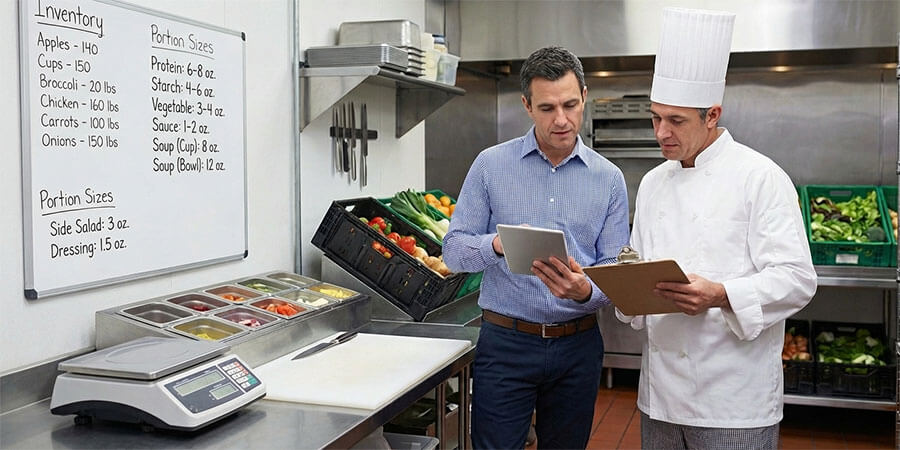
Table of Contents
Practical Strategies to Improve Your Bottom Line
Restaurant food costs average thirty-two percent of sales, leaving razor-thin profit margins of just three to five percent. With wholesale food prices thirty-four percent higher than pre-pandemic levels and forty-two percent of operators reporting unprofitable operations in 2024, controlling food costs has never been more critical. This guide covers eight proven strategies to reduce food costs through better tracking, portion control, inventory management, menu engineering, supplier negotiations, waste reduction, and team training.
Food costs represent the single largest controllable expense for most restaurants. For both full-service and limited-service operations, food and beverage costs typically consume about thirty-two percent of total sales. When you're working with industry-average profit margins of just three to five percent, even small improvements in food cost management can mean the difference between profitability and closure.
The challenge has intensified in recent years. Total restaurant input costs have climbed thirty percent since pre-pandemic levels, while sixty percent of operators reported softer customer traffic in 2025. You can't always control market prices or customer counts, but you can control how efficiently you purchase, store, prepare, and serve food.
The good news? Most restaurants have significant room for improvement. Industry research shows that four to ten percent of food purchased by restaurants never gets served to customers. Surplus food from the foodservice sector was valued at one hundred fifty-seven billion dollars in 2024, representing about fourteen percent of total foodservice sales. These aren't just environmental concerns - they're profit leaking directly from your bottom line.
The strategies below focus on practical, actionable steps you can implement immediately to reduce food costs without compromising quality or customer satisfaction.
Know Your Numbers and Track Them Religiously
You can't manage what you don't measure. The foundation of food cost control is knowing your actual food cost percentage and tracking it consistently.
Calculate your food cost percentage using this simple formula: divide your total food costs by your total food sales, then multiply by one hundred. If you spent ten thousand dollars on food inventory and generated thirty-two thousand dollars in food sales, your food cost percentage is thirty-one percent.
The industry benchmark sits around thirty-two percent for both full-service and limited-service restaurants, but this varies significantly by concept, location, and menu type. Interestingly, larger full-service restaurants with annual sales exceeding two million dollars typically achieve lower food costs - averaging thirty-one percent compared to thirty-three point seven percent for smaller operations. This efficiency advantage comes from better purchasing power, more sophisticated inventory systems, and economies of scale.
Track your food cost percentage weekly, not monthly. Weekly tracking lets you spot problems quickly - a vendor price increase, unexpected waste, or theft - before they compound. Break down costs by category (proteins, produce, dairy, dry goods) to identify specific problem areas.
Compare your actual usage against theoretical usage based on sales and recipes. If your point-of-sale system shows you sold one hundred burgers but your inventory indicates you used one hundred twenty burger patties, you have a twenty percent variance that needs investigation. This gap might indicate portioning problems, theft, spoilage, or recording errors.
Understanding your menu pricing strategy becomes much easier when you have accurate food cost data for every dish.
Control Portions Consistently
Inconsistent portioning is one of the most common and costly mistakes in restaurant operations. When your line cook gives some customers six ounces of protein and others eight ounces, you're giving away profit with every oversized portion.
Standardize every recipe with exact measurements, cooking methods, and plating specifications. Your recipes should be detailed enough that any trained team member can replicate the dish exactly. Include photos of properly plated dishes as visual references.
Invest in portioning tools that make consistency easy. Portion scales eliminate guesswork for proteins and other expensive ingredients. Measuring cups and portion spoons ensure accurate measurements for sauces, sides, and garnishes. Ladles and scoops with specific volumes help with soups, batters, and ice cream.
Pre-portioning during prep time, rather than during service, improves both consistency and speed. Portion proteins, cut vegetables to standard sizes, and prepare sauce containers in advance. This approach reduces waste from rushed portioning during busy periods.
Monitor plate waste carefully. If customers consistently leave food on their plates, you may be serving portions that are too large. Industry research shows that fifty-four percent of restaurant food waste comes from customer plate waste. Right-sizing portions based on actual consumption patterns reduces both food costs and waste disposal costs.
Train your team to understand that proper portioning isn't about being cheap - it's about consistency and fairness. Every customer should receive the same high-quality experience, and proper portioning ensures that happens while protecting your margins.
Manage Inventory to Reduce Waste
Poor inventory management is expensive. The U.S. foodservice sector generates twelve point five million tons of surplus food annually, with forty-nine percent of restaurant food waste attributed to spoilage.
Implement FIFO (First In, First Out) rigorously. New deliveries go to the back; older inventory moves forward. Label everything with receiving dates and use-by dates. Invest in quality food storage containers that stack efficiently and keep products visible.
Conduct regular inventory counts - at minimum weekly for high-value items like proteins and seafood, monthly for everything else. Physical counts reveal shrinkage from spoilage, theft, or unrecorded usage. They also prevent over-ordering by showing you what you actually have on hand.
Organize your storage areas logically. Group similar items together. Keep high-turnover items easily accessible. Maintain proper temperatures and humidity levels. A well-organized walk-in refrigerator isn't just about efficiency - it prevents items from getting lost and forgotten until they spoil.
Extend shelf life where appropriate. Vacuum packaging machines can significantly extend the life of proteins, cheeses, and prepared ingredients by removing air and preventing oxidation. This technology is particularly valuable for operations that buy in bulk or prep ingredients several days in advance.
Monitor par levels for every ingredient. Par levels represent the maximum amount you should have on hand between deliveries. Setting appropriate pars prevents over-ordering while ensuring you never run out during service. Adjust pars seasonally and based on sales trends.
For a deeper dive into inventory systems and best practices, see our guide on restaurant inventory management.
Engineer Your Menu for Profitability
Not all menu items contribute equally to your bottom line. Menu engineering - the practice of analyzing each dish's profitability and popularity - helps you emphasize high-margin items and reconsider low-performers.
Categorize your menu items into four groups: Stars (popular and profitable), Plowhorses (popular but low-margin), Puzzles (profitable but unpopular), and Dogs (unpopular and unprofitable). This analysis reveals which items deserve prominent menu placement and which need repricing, repositioning, or removal.
Focus on contribution margin, not just food cost percentage. A steak with a forty percent food cost might generate a higher dollar profit than a pasta dish with a twenty-five percent food cost if the steak's selling price is significantly higher. Calculate the actual dollar profit per dish to understand true profitability.
Strategically position high-margin items on your menu. The upper-right corner of a menu page typically gets the most attention, followed by the top of each section. Use design elements like boxes, icons, or white space to draw attention to your most profitable dishes. Our restaurant menu design guide covers these principles in detail.
Cross-utilize ingredients across multiple dishes. When the same ingredient appears in several menu items, you can purchase larger quantities at better prices while reducing the risk of spoilage. A versatile ingredient like roasted red peppers might appear in appetizers, entrees, and sandwiches.
Adjust portion sizes and pricing based on actual costs. If ingredient costs rise significantly, you have three options: raise prices, reduce portions slightly, or reformulate the dish with less expensive ingredients. Often, a small price increase combined with minor recipe adjustments maintains profitability without shocking customers.
Limit your menu size to what you can execute excellently with minimal waste. A focused menu allows for better inventory control, more efficient prep, and higher ingredient turnover. Every additional menu item increases complexity and the risk of spoilage.
| Menu Engineering Category: | Characteristics: | Strategy: |
| Stars | High popularity, high profit | Feature prominently; maintain quality; protect recipes |
| Plowhorses | High popularity, low profit | Increase prices carefully; reduce portions; improve efficiency |
| Puzzles | Low popularity, high profit | Reposition on menu; rename; add descriptions; train servers to upsell |
| Dogs | Low popularity, low profit | Remove from menu or completely reformulate |
Negotiate Smarter with Suppliers
Your relationship with suppliers directly impacts your food costs. Strategic purchasing and smart negotiations can yield significant savings without compromising quality.
Compare prices across multiple suppliers for your most expensive items. Get quotes from at least three vendors for proteins, produce, and other high-cost categories. Even small percentage differences add up quickly on high-volume purchases.
Consolidate orders when possible to qualify for volume discounts and reduce delivery fees. However, balance consolidation against the risk of over-ordering perishables. Sometimes paying slightly more per unit for smaller, more frequent deliveries reduces overall costs by minimizing waste.
Buy seasonally for produce. Seasonal items are more abundant, fresher, and significantly less expensive than out-of-season alternatives. Build your menu around seasonal availability, or at least offer seasonal specials that take advantage of peak pricing.
Negotiate payment terms that work for your cash flow. Some suppliers offer discounts for early payment, while others provide net-thirty or net-sixty terms that help manage cash flow during slower periods. Understand the true cost of each option.
Build relationships with your sales representatives. Good reps can alert you to upcoming price increases, suggest substitute products when your usual items spike in price, and help you take advantage of promotional pricing. They're more likely to go the extra mile for customers they know and trust.
Review invoices carefully against your purchase orders. Pricing errors, incorrect quantities, and unauthorized substitutions happen. Catching these mistakes quickly protects your margins and keeps suppliers accountable.
Consider joining a purchasing cooperative if you're an independent operator. Co-ops pool purchasing power from multiple restaurants to negotiate better prices and terms than individual operations could achieve alone.
Reduce Waste at Every Stage
Waste reduction deserves special attention because it directly converts to profit improvement. An operator survey by FCSI (2024) identified the top reasons restaurants lose food: fifty-four percent cited customer plate waste, forty-nine percent cited spoilage of fresh items with short shelf life, and thirty-eight percent cited inaccurate portioning.
Track waste systematically. Create a waste log where staff record what was thrown away, how much, and why. Categories might include spoilage, prep errors, cooking mistakes, dropped items, and plate waste. This data reveals patterns and opportunities for improvement.
Train prep staff on proper techniques to maximize yield. How you butcher proteins, trim vegetables, and break down ingredients significantly impacts usable yield. Sometimes investing in training or better prep tools pays for itself quickly through improved yields.
Use trim and scraps creatively. Vegetable trimmings become stock. Bread ends become croutons or breadcrumbs. Overripe fruit goes into sauces or smoothies. Day-old baked goods become bread pudding. This approach requires creativity and planning but can significantly reduce waste costs.
Implement proper storage protocols to prevent spoilage. Maintain correct temperatures, use appropriate containers, label everything with dates, and organize storage areas for visibility. Many spoilage issues stem from items getting pushed to the back and forgotten.
Monitor cooking processes to reduce errors. Overcooked proteins, burned items, and dishes that don't meet quality standards all represent pure waste. Proper training, clear standards, and adequate staffing during busy periods reduce these costly mistakes.
Right-size your purchasing based on actual usage patterns. Over-ordering, especially of perishables, inevitably leads to spoilage. Use your sales data and inventory tracking to order only what you'll realistically use before items expire.
For comprehensive waste reduction strategies, see our detailed guide on ways to reduce restaurant food waste.
| Waste Source: | Typical Percentage: | Primary Solutions: |
| Customer plate waste | 54% | Right-size portions; offer half portions; monitor returns |
| Spoilage | 49% | FIFO rotation; proper storage; accurate ordering |
| Inaccurate portioning | 38% | Standardized recipes; portioning tools; training |
| Prep and cooking errors | 15-20% | Staff training; proper equipment; adequate staffing |
Train Your Team on Cost Awareness
Your staff's daily decisions and habits directly impact food costs. Creating a culture of cost awareness turns your entire team into partners in profitability.
Educate staff on the economics of your restaurant. Many team members don't understand how thin profit margins are or how their actions affect profitability. Share (appropriate) financial information so they understand why cost control matters.
Train on proper portioning and make it easy to do correctly. Provide the right tools, clear recipes, and visual guides. Recognize and reward consistency. Make it clear that proper portioning is a job requirement, not a suggestion.
Teach proper storage and handling procedures. Staff should understand FIFO rotation, proper labeling, correct storage temperatures, and how to identify spoiled items. Make these procedures part of onboarding and ongoing training.
Empower staff to prevent waste. Encourage servers to alert the kitchen when customers consistently leave certain items uneaten. Welcome suggestions from prep cooks about ways to use trim or reduce waste. Create a culture where everyone feels responsible for efficiency.
Hold staff accountable for their areas of responsibility. If a line cook consistently over-portions, address it directly. If a prep cook's yields are consistently low, provide additional training or supervision. Clear expectations and accountability are essential.
Incentivize cost control where appropriate. Some restaurants share a percentage of cost savings with staff or include food cost metrics in bonus calculations for managers. When the team benefits from better cost control, they're more motivated to maintain it.
Lead by example. Management's habits set the tone. If managers are careless about waste or portioning, staff will be too. Demonstrate the behaviors and attention to detail you expect from your team.
Frequently Asked Questions
What is a good food cost percentage for a restaurant?
The industry average is thirty-two percent for both full-service and limited-service restaurants, but acceptable ranges vary by concept. Fine dining operations might run thirty-five to forty percent due to premium ingredients, while quick-service concepts might target twenty-five to thirty percent. More important than hitting a specific number is maintaining consistency and understanding your own profitability at your current food cost level.
How often should I calculate my food cost percentage?
Calculate food cost percentage weekly for the most effective control. Weekly tracking lets you identify problems quickly - such as vendor price increases, unexpected waste, or theft - before they significantly impact your bottom line. Monthly calculations are too infrequent to catch issues early. Many successful operators also track daily food costs for high-value items like proteins and seafood.
What's the difference between actual food cost and theoretical food cost?
Theoretical food cost is what your food costs should be based on your recipes and sales mix. Actual food cost is what you really spent. The difference between them - called variance - reveals inefficiencies like over-portioning, waste, theft, or recording errors. A variance of two to three percent is normal; anything higher indicates problems that need investigation.
How can I reduce food costs without lowering quality?
Focus on efficiency rather than cheaper ingredients. Improve portion control, reduce waste through better storage and FIFO rotation, cross-utilize ingredients across multiple dishes, buy seasonally, negotiate better supplier pricing, and train staff on proper techniques. These approaches maintain quality while significantly reducing costs. Menu engineering also helps by emphasizing naturally high-margin items rather than compromising on ingredient quality.
Should I buy in bulk to save money?
Bulk buying saves money only if you can use the product before it spoils and have adequate storage space. Calculate the true cost including potential waste, storage costs, and tied-up cash. Bulk buying works well for non-perishables and items you use in high volume. For perishables, smaller, more frequent deliveries often cost less overall by reducing spoilage, even if the per-unit price is slightly higher.
How do I handle food cost increases from suppliers?
You have several options: negotiate with suppliers or find alternatives; adjust menu prices (small, regular increases are less noticeable than large jumps); slightly reduce portion sizes; reformulate dishes with less expensive ingredients; or emphasize higher-margin menu items through positioning and server training. Most successful operators use a combination of these strategies rather than relying on a single approach.
What technology helps with food cost control?
Inventory management software tracks usage and automates ordering based on par levels. Recipe costing software calculates exact food costs for each dish and updates automatically when ingredient prices change. Point-of-sale systems with inventory integration track theoretical usage based on sales. However, technology only helps if you use it consistently and act on the data it provides. Many restaurants achieve excellent food cost control with simple spreadsheets and disciplined manual tracking.
Related Resources
- Guide to Pricing Menu Items at Your Restaurant - Comprehensive guide to menu pricing strategies, food cost calculations, and profitability analysis
- Restaurant Menu Design - Ultimate Guide for Better Menus - Learn menu engineering principles and design strategies to emphasize high-margin items
- 5 Ways Your Restaurant Can Reduce Food Waste - Detailed strategies for minimizing waste from receiving through service
- Tips for Managing Your Restaurant Inventory - Best practices for inventory tracking, ordering systems, and stock rotation
- Food Storage Containers & Lids - Browse commercial-grade storage solutions for proper food preservation and organization
Share This!