How to Motivate Restaurant Employees
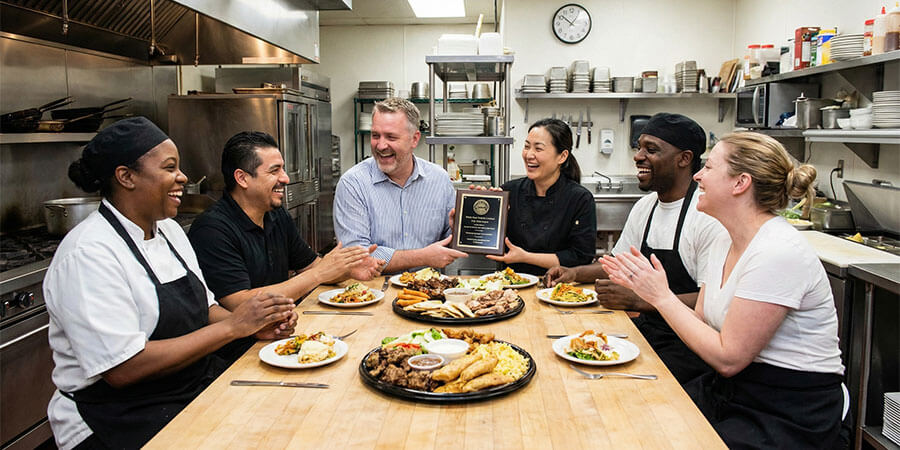
Table of Contents
Proven strategies for keeping your restaurant team engaged, reducing turnover, and building a staff that stays
The restaurant industry's turnover rate tops 75%, which means most operators are constantly hiring, training, and losing people. Motivation is what breaks that cycle. This post covers practical, low-cost strategies for keeping restaurant employees engaged - from meaningful recognition and flexible scheduling to career development, team culture, and the daily management habits that determine whether good people stay or leave.
The restaurant industry employs 15.9 million people across the United States, according to the National Restaurant Association's 2025 projections. It is the nation's second-largest private-sector employer - and one of its most difficult when it comes to keeping people.
Turnover in the restaurant industry consistently tops 75% annually, according to Homebase's 2025 workforce research. That means the average restaurant replaces three-quarters of its staff every year. Each departure costs time, money, and institutional knowledge. The remaining team picks up the slack, burns out faster, and the cycle accelerates.
But some restaurants break this pattern. They hold onto their best people for years while competitors across the street are hiring every month. The difference is rarely pay alone. It is the daily experience of working there - whether employees feel valued, supported, and motivated to do their best work.
Gallup's ongoing Q12 meta-analysis on employee engagement - now spanning more than 183,000 business units across 50-plus industries - consistently finds that workplaces in the top quartile for engagement see significantly less turnover, 81% less absenteeism, and 23% higher profitability compared to those in the bottom quartile. In a high-turnover industry like restaurants, even a modest improvement in engagement creates a measurable competitive advantage.
Here is how to build it.
Recognize People Specifically and Often
Recognition is the simplest and cheapest motivator - and the one most operators neglect.
Be specific, not generic. "Good job tonight" is forgettable. "You handled that difficult table at 22 perfectly - the way you stayed calm when they changed their order three times kept the whole section running smooth" tells the employee exactly what they did right and why it mattered. Specific recognition reinforces the behaviors you want repeated.
Recognize publicly when appropriate. A quick shout-out during a pre-shift meeting costs nothing and creates a culture where good work gets noticed. Some operators keep a whiteboard in the back where managers and peers can write recognition notes throughout the week.
Do not wait for perfection. Recognize effort and improvement, not just flawless performance. A new server who handles their first busy Friday without falling behind deserves acknowledgment even if they made minor mistakes. Waiting until someone is "great" before you say anything means most of your team hears nothing.
Make Scheduling Fair and Predictable
Few things damage restaurant employee motivation faster than chaotic scheduling.
Post schedules at least two weeks in advance. Last-minute schedules force employees to arrange childcare, second jobs, and personal commitments on short notice. That stress follows them onto the floor. Predictable schedules show respect for their time outside of work.
Distribute desirable shifts fairly. If the same people always get Friday nights (the best tip shifts) while others are stuck on slow Tuesdays, resentment builds fast. Rotate high-value shifts or create a transparent system for earning them based on seniority, performance, or both.
Handle time-off requests consistently. Have a clear policy and follow it. Nothing kills trust faster than approving one person's request while denying another's for no apparent reason.
| Scheduling Practice | Impact on Motivation |
| 2+ weeks advance posting | Reduces stress, shows respect for personal time |
| Fair rotation of high-value shifts | Prevents resentment, rewards tenure and performance |
| Consistent time-off policy | Builds trust in management fairness |
| Shift swap flexibility | Gives employees autonomy without adding manager workload |
| Avoiding on-call or clopens | Reduces burnout and unplanned absences |
Several states and cities - including Oregon, New York City, Chicago, Philadelphia, and Seattle - have enacted Fair Workweek or predictive scheduling laws that require employers to post schedules in advance and compensate workers for last-minute changes. Even if your location is not covered by these laws, following their principles is good management practice.
Create Real Paths for Growth
One of the original post's tips was "offer chances for advancement." That advice is correct - but most restaurants implement it poorly or not at all.
Define what advancement looks like. A busser who wants to become a server needs to know exactly what skills they need, how long the process typically takes, and what milestones they should hit along the way. Vague promises of "maybe someday" are not motivating.
Cross-train intentionally. Cross-training is not just a scheduling convenience - it is a development tool. Teaching a line cook expo skills, or training a host on basic bar service, gives employees new capabilities and prevents the boredom that comes from doing the exact same tasks every shift.
Promote from within whenever possible. When your team sees that shift leads, trainers, and managers come from the existing staff rather than outside hires, they understand that effort leads somewhere. Every outside hire for a role that could have been filled internally sends the opposite message.
Invest in Training Beyond Day One
Most restaurant training happens during the first week and then stops. That is a mistake.
Ongoing training signals investment. When you train employees beyond the minimum required to do their job, you are telling them you see a future for them at your restaurant. A customer service training refresher every quarter, a wine education session, or a kitchen skills workshop gives employees something to build toward.
Pair new hires with strong mentors. Shadowing a binder is not training. Pairing a new employee with a high-performing team member for their first two weeks creates a relationship, transfers institutional knowledge, and gives the new hire someone to ask questions without feeling like they are bothering a manager.
Debrief after tough shifts. A five-minute conversation after a chaotic Saturday night - what went right, what broke down, what can we do differently - turns a stressful experience into a learning moment instead of just a bad memory.
Feed Your Team and Share the Food
The original 2014 version of this post included "let them eat" as a tip, and it remains one of the most effective low-cost motivators in the industry.
Offer a staff meal or shift meal. A pre-shift family meal builds camaraderie, gives the kitchen a chance to test new dishes, and ensures your team is not working hungry. Staff who eat your food can describe it to guests with genuine enthusiasm - "I had the special today and it's excellent" sells far better than reading a description off a menu.
During long or high-volume shifts, take care of basic needs. Make sure your team has access to water, that breaks actually happen, and that someone is not running a double without eating. These seem obvious, but in the heat of service they are often the first things forgotten - and your staff notices.
Communicate Like an Actual Leader
Effective restaurant management comes down to communication more than any other single skill.
Hold brief pre-shift meetings. Five minutes before every shift - cover the specials, any 86'd items, reservations, and one thing the team did well recently. This simple ritual aligns everyone, prevents surprises, and creates a moment of connection before the rush.
Explain the why behind decisions. Changing the side-work checklist? Explain why. Adjusting the table rotation? Explain why. Employees who understand the reasoning behind operational changes are far more likely to buy in than those who are just told what to do.
Ask for input and actually use it. Your servers know which menu items guests complain about. Your line cooks know which station setup slows them down. Your hosts know which seating arrangement causes problems. If you ask for their input and occasionally act on it, you build ownership. If you ask and never change anything, you build cynicism.
Build Team Identity, Not Just a Roster
A restaurant where everyone is just "working their shifts" feels different from one where people feel like they are part of something.
Foster friendly competition. Weekly contests - highest dessert sales, best upsell percentage, most positive comment cards - with small rewards create energy without pressure. The reward does not need to be expensive. A gift card, a preferred parking spot, or first pick of the next schedule can all work.
Celebrate together outside of work. A quarterly team outing - bowling, a cookout, a group dinner at another restaurant - builds relationships that make the daily grind more tolerable. People work harder for teammates they actually like.
Address toxic behavior immediately. Nothing destroys team motivation faster than one person who brings negativity, gossip, or hostility to every shift while management does nothing. Your best employees will not complain - they will just leave. Protecting your team culture means holding everyone to the same standard of professionalism.
Pay Attention to the Work Environment
Your staff spends 8-12 hours a day in your restaurant. The physical environment affects their motivation more than most operators realize.
Keep equipment functional. A fryer that takes 20 minutes to recover, a POS system that crashes during the rush, or a walk-in cooler that ices over constantly - these are not just operational problems. They are daily frustrations that grind down morale. Investing in reliable restaurant equipment and staying current on maintenance is an investment in your team's daily experience.
Make the break area livable. If your staff break area is a milk crate next to the dumpster, that communicates exactly how much you value their comfort. A clean, air-conditioned space with seating - even a small one - shows basic respect.
Review your staffing levels honestly. Chronically understaffed shifts are the single biggest driver of burnout. If your team is consistently stretched too thin, no amount of recognition or team-building will compensate. Staff to the level your business requires, even if it means slightly higher labor costs.
Frequently Asked Questions
What is the most effective way to motivate restaurant employees?
Consistent, specific recognition combined with fair scheduling and genuine growth opportunities. Most restaurant workers do not leave over pay alone - they leave because they feel unappreciated, unfairly treated, or stuck. Address those three things and retention improves significantly.
How do I motivate restaurant staff without raising wages?
Focus on the non-monetary motivators that research shows matter most - predictable scheduling, public recognition, cross-training opportunities, staff meals, and respectful communication. These cost little or nothing but directly address the daily experience that determines whether someone stays or starts looking elsewhere.
How much does restaurant employee turnover actually cost?
Industry estimates for replacing a single hourly restaurant employee typically range from several hundred to several thousand dollars when accounting for recruiting, onboarding, training time, and the productivity gap while the new hire gets up to speed. For management positions, the cost is significantly higher. The exact figure depends on your market, role, and training process - but it is always more than operators expect.
How often should I recognize employees?
Frequently - at least once per shift for the team as a whole, and individually whenever you catch someone doing something well. Recognition loses its impact if it only happens during annual reviews or when someone goes above and beyond. The goal is making it a daily habit, not a special occasion.
Does flexible scheduling really improve retention?
Yes. Unpredictable scheduling is consistently cited as one of the top reasons restaurant workers leave. Posting schedules at least two weeks in advance, allowing shift swaps, and honoring time-off requests fairly all reduce the scheduling-related stress that drives people out of the industry entirely.
How do I handle an employee who is unmotivated but otherwise competent?
Start with a private, direct conversation. Ask what is going on - sometimes the cause is personal, sometimes it is workplace-related. If the issue is boredom, consider cross-training or new responsibilities. If it is a management or scheduling problem, fix it. If the employee has simply checked out despite your efforts, it may be time for a candid conversation about fit.
What role does the physical work environment play in staff motivation?
A significant one. Broken equipment, inadequate ventilation, no break area, and chronic understaffing all communicate that the business prioritizes cost savings over the team's basic comfort. Functional equipment, a clean workspace, and adequate staffing are foundational - they do not motivate by themselves, but their absence actively demotivates.
Related Resources
- Restaurant Customer Service Training - Build a training program that keeps standards high across every shift
- How to Properly Staff Your Restaurant - Get staffing levels right to prevent the burnout that kills motivation
- 5 Tips on How to Be an Effective Restaurant Manager - Leadership fundamentals for managing restaurant teams
- Improving Wait Staff Productivity - Operational tips for getting more from your front-of-house team
- Restaurant Financing Guide - Financial options when you need to invest in your team or equipment
Share This!